
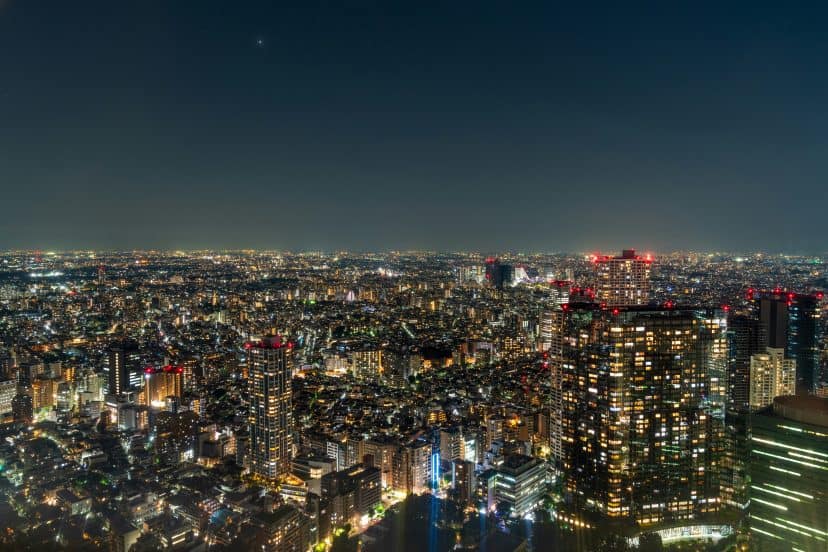






Tokyo’s most memorable moments are not always at pavement level. Learn how to read the city’s directories, stairwells and lifts to find its upper-floor bars, cafés, galleries and dining rooms respectfully.


Introduction
Tokyo is easy to read at eye level. Steam rises from a ramen counter towards the pavement. A convenience store hums beneath a bright sign. Commuters spill from station exits, while shopfronts offer their wares in neat, immediate frames.
But the city rarely ends at the pavement. Beside a pharmacy, a slim stairwell disappears upwards. A compact lift serves a handful of unrelated businesses. A panel of small nameplates lists floor numbers in Japanese, Roman lettering, or simply a recognisable logo. Above the street might be a quiet café, a gallery, a dining room, a music bar—or an office that is very much not for visitors.
This is not a code to crack, nor a promise that every unassuming entrance conceals a great discovery. It is simply part of how a dense, mixed-use city works. Some of Tokyo’s most rewarding public places come into focus only when you stop treating the ground floor as the whole story.
The pleasure lies in looking carefully: recognising an invitation when it is there, making a little plan before setting off, and respecting the businesses and people behind each door.

Tokyo starts at eye level — then asks you to look up
A Tokyo building can change character floor by floor. One entrance may serve a café, salon, restaurant, small creative business and private offices, each with its own hours and relationship to the street. The arrangement is often visible in plain sight, provided you pause long enough to read it.
Shibuya TSUTAYA is a particularly legible large-scale example. Its facilities are arranged across several levels, with cafés, event spaces, lounges, books and entertainment occupying different floors. It is not hidden, but it is a building read floor by floor—a useful habit to carry into quieter streets.
Elsewhere, the signals are more modest. A sandwich board may sit at the foot of a staircase. A window decal might carry nothing more than “3F”. A lift lobby can hold a directory so dense it resembles a miniature map of the building. Sometimes the sign is primarily in Japanese; sometimes a venue relies on a mark rather than a full name.
That does not mean every shared entrance is an invitation to explore. Many buildings contain homes, workplaces and tenants with controlled access. The point is not to roam through private corridors in search of a story. It is to notice the venues that clearly welcome the public, then approach them as guests rather than explorers claiming a discovery.
A Tokyo building can change character floor by floor. One entrance may serve a café, salon, restaurant, small creative business and private offices, each with its own hours and relationship to the street.

Why so much of Tokyo happens above the pavement
Tokyo’s vertical life has practical roots. Across central and sub-centre districts, commercial activity, offices, homes, cultural spaces and everyday services sit close together. Tokyo planning material recognises this broad pattern of mixed-use urban fabric, even if it cannot tell us how many independent upper-floor venues exist across the city.
For a small business, an upper floor can provide a more contained room than a street-facing premises. That can suit a bar built around conversation, a restaurant with limited covers, an appointment-led studio or a gallery that needs a calmer setting than the pavement allows. The result is not one uniform version of “upstairs Tokyo”, but a patchwork shaped by building age, plot size, neighbourhood pace, operating costs and the business itself.
In Ginza and Shinbashi, the official picture of evening life includes tall buildings containing stacked izakaya, particularly as weekday workers move from offices into dinner and drinks. In Shinjuku, the rhythm can feel relentlessly kinetic. Shibuya is often youthfully busy, while Roppongi has its own late-night mix. Tokyo’s after-dark neighbourhoods are varied enough that it is better to choose an area for the kind of night you want than to assume every district offers the same experience.
A few metres above traffic, the atmosphere can shift. A room may feel removed from the urgency below without being separate from it: train announcements still drift through an open window, neon catches on glass, and the street continues moving far beneath the table. That contrast is often the appeal—not an escape from Tokyo, but another register of the same city.
The clues worth noticing on a Tokyo street
Good vertical wandering begins before you enter a building. As you walk, look for the signs that establish a venue’s public presence and its practical terms.
- Building directories: Check whether a business is named beside a floor number, and whether the entrance is clearly shared or controlled.
- Signs at stairwells and lift entrances: These can be more informative than a façade, especially where a venue has little street-level branding.
- Window lettering: A floor number, opening hours or logo can indicate what lies above without turning the entrance into a spectacle.
- Current information: Before making a special journey, check a venue’s own channels for opening days, reservations, payment arrangements and access instructions.
Japanese-only signage is not necessarily a barrier or a signal of exclusivity. It may simply be how a business communicates with its regular local clientele. Translation tools can help with basic details, but a clear official booking page, email address or phone contact is often more useful than trying to interpret every sign on the spot.
Once you have found a venue that appears open to the public, read its entrance information and follow its arrival process. Official guidance on what to expect when arriving at a Tokyo restaurant recommends checking signage and waiting for staff to guide you after entering. That small pause matters in compact spaces, where there may be no waiting area and staff may be managing a full room.
Avoid obstructing doorways, taking photographs of directories that might contain personal information, or entering a residential-looking building merely to see what is there. Curiosity works best when paired with restraint.
Four kinds of upstairs Tokyo experience
Small bars
An upper-floor bar may have only a handful of seats. That intimacy can be its character, but it is also a practical limit. The room may be designed for attentive drinks, close conversation or music rather than a spontaneous large group. Cover charges, booking requirements, payment methods and smoking policies vary from place to place, so treat them as venue-specific rather than citywide customs.
The most useful question is not, “Is this hidden?” but, “Is this the kind of room I want tonight, and have I checked how it works?” A small bar may be ideal for two people with time to spare; it may be a poor fit for a party hoping to arrive late without a reservation.
Restaurants and cafés
Upstairs dining can feel quietly separate from the traffic below, whether it is a formal dining room or a casual coffee stop. In Shibuya, Blue Bottle Coffee publicly lists seating on both its first and second floors, making it a straightforward example of a second-floor Shibuya café. Vertical Tokyo is not limited to obscure venues; sometimes the second floor is simply where a familiar business makes more room to sit.
For a more formal meal, an upper-floor address may come with a reservation system, dress guidance, cancellation terms or a set menu. These details are best understood as part of the experience rather than obstacles to it. They help a small restaurant operate smoothly and allow guests to arrive prepared.
Galleries, studios and independent retail
Art spaces reward the same attention to floor numbers. Tokyo Gallery + BTAP is on the seventh floor of a Ginza building and publishes its contact details and regular Tuesday-to-Saturday hours online. Its programme and opening arrangements can change, so check Tokyo Gallery + BTAP before visiting rather than relying on an old listing.
Galleries are also good places to resist turning discovery into a checklist. See what is actually on, allow time for the exhibition, and follow any instructions on entry, bags or photography. A building directory can point you upwards, but it cannot tell you whether a show will speak to you.
Music rooms and cultural venues
Some upper-floor rooms are shaped around listening rather than talking. Others host live jazz, talks, readings or small events. Here, house rules can be central to the experience: a quiet room is not necessarily unfriendly, and a photography restriction may protect performers, guests or the atmosphere of the space.
Before committing to a music-focused venue, check the programme, admission structure, booking terms and approach to conversation and cameras. In intimate settings, the venue’s own rules matter more than any general guide.
Neighbourhoods where looking up pays off
The most useful way to choose an area is by mood and timing, not by pursuing the claim that one district is more “hidden” than another.
Shinjuku and Shibuya suit travellers who enjoy density, late opening and a sense of constant movement. The number of signs can be overwhelming, but that abundance makes floor-by-floor reading part of the streetscape. Begin with one place you genuinely want to visit, then give yourself time to notice what is nearby.
Ginza offers another tempo. Major stores coexist with side streets, small bistros and galleries; Ginza’s galleries and backstreets can support an afternoon of looking as much as an evening out. It is not shorthand for one budget or one kind of visitor, but a district where a gallery visit and dinner can sit naturally in the same plan.
Aoyama and Omotesando are worth considering when design, architecture, boutiques and a more measured pace appeal. The mix of acclaimed dining, art and open space gives Aoyama and Omotesando a different texture from the station-heavy energy of Shibuya.
Roppongi and Azabu can work well for an evening built around galleries, dining or music, though individual venues still determine the tone. In every area, opening hours and reservation culture matter more than broad neighbourhood labels.
For a longer stay, choosing a base that makes several districts easy to reach can help you experience them at different times of day. Explore serviced accommodation in Tokyo if you are planning to settle in long enough to let the city reveal its everyday rhythms.
How to go upstairs without getting it wrong
The best practical advice is simple: assume that every venue has its own conditions, and check them before you go.
- Reserve where appropriate. Small restaurants and bars can fill quickly. If a booking system is available, use it rather than treating a full room as a failure of hospitality.
- Keep the room in mind. Speak at a level that suits the space, especially in calm dining rooms and music-focused venues.
- Ask before photographing. Food, interiors, staff and other guests may all be subject to a venue’s policy. The guidance on Tokyo dining etiquette is clear: ask permission when photographs may include staff or other diners.
- Do not assume access. A lift in a station does not establish step-free access inside a private building. Stairs, narrow lifts, internal level changes and inaccessible toilets may all be factors.
- Seek specific information. The city’s accessible restaurant guide shows the value of venue-level details, such as entrance widths, steps and toilet provision. Contact a venue directly where your access needs are specific.
- Leave gracefully when necessary. If a space is full, private, clearly appointment-only or not comfortable for your group, move on without argument.
TOTO GALLERY・MA demonstrates why blanket assumptions are unhelpful. Its visitor information notes steps between areas on the third and fourth floors. That does not make it unsuitable for everyone, but it does mean visitors should consult TOTO GALLERY・MA visitor information and make their own informed decision.
A better way to spend an evening in Tokyo
A satisfying Tokyo evening does not need to be a hunt for an elusive address. Choose one researched destination: dinner, a gallery, a café, a live set or a drink. Check its opening details, make a reservation if needed, and leave enough time to walk the surrounding streets without a rigid agenda.
Along the way, read the signs. Notice how a building shifts from a bright ground floor to a quiet stair landing, from a busy lift lobby to a small room with its own rules. Look at the tiled entranceways, the hand-written notices, the scatter of floor numbers reflected in glass. If a public venue catches your attention and the practical details work, go upstairs. If not, keep walking.
That balance of preparation and openness is more rewarding than trying to collect “secret” places. Tokyo’s vertical city is not a puzzle designed to exclude visitors. It is a lived-in arrangement of working businesses, public culture and everyday routines. Look up, take your time and let the city show you what is clearly there.
For a stay that gives you time to explore beyond the obvious, you can also read about what day-to-day life in Tokyo feels like.