
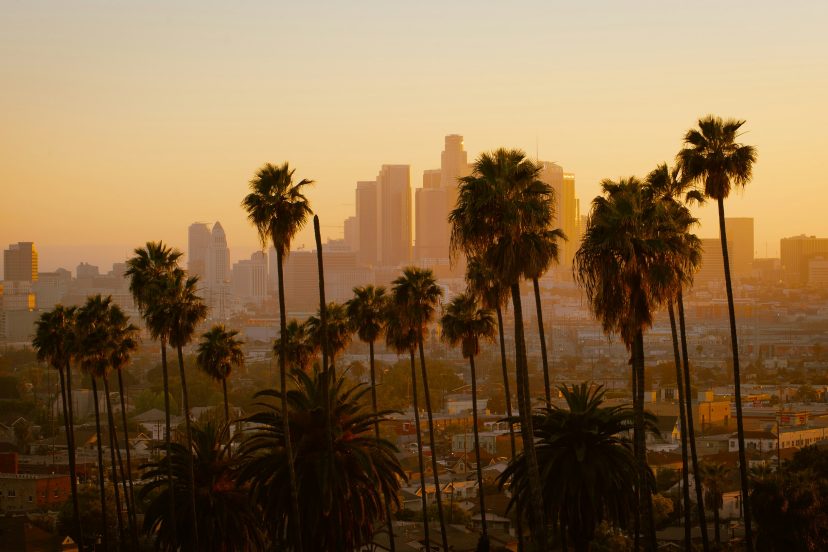





Los Angeles still trades in powerful imagery, but its appeal in 2026 is less about chasing an old fantasy and more about understanding the city on its own terms. Hollywood, the Sunset Strip and Venice Beach still matter, though each now works best as part of a broader, more layered trip built around neighbourhoods, atmosphere and contrast.


Introduction
Few cities arrive with such a fully formed image as Los Angeles. Long before a trip is booked, most people already have some version of it in mind: palm-lined boulevards, premiere lights, motel signs, studio mythology, convertibles at dusk, skaters by the sea. The complication is that LA has never really been one fixed thing. It has always been a city of reinvention, where image and everyday life overlap without ever quite matching.
That matters even more in 2026. Visitors still come looking for Hollywood, the Sunset Strip and Venice Beach, and those places do still matter. But they no longer feel like sealed-off dream worlds, if they ever did. What they offer now is richer and a little more complicated. Some landmarks endure precisely because they have kept operating rather than turning into static symbols. Others have been repurposed, polished, commercialised or folded into a wider neighbourhood story.
So the question is not whether Los Angeles has lost what once made it attractive. It is whether travellers are willing to engage with what the city offers now: a patchwork of iconic sights, residential calm, design-conscious hospitality, film culture, beach routines, live events and dramatic geography. In that sense, LA is still deeply cinematic. It is simply less interested in playing a single role.

Why Los Angeles keeps changing
Los Angeles keeps changing because the forces that shape it are unusually easy to see. Entertainment still matters, but so do property pressure, migration, wellness culture, hospitality investment, car dependence and newer tech-adjacent ways of working and living. Neighbourhoods do not simply rise or fall; they are continually revised. A venue becomes a hotel project, an old cultural reference becomes a branded experience, and a district once associated mainly with nightlife turns into a daytime destination for dining and design as well.
Visitors have changed too. Many no longer arrive expecting an uninterrupted celebrity fantasy. They are looking for food, architecture, public life, gallery districts, coastal walking, coffee, view lines and local texture. That helps explain why LA’s classic attractions still matter, but rarely in isolation. The city now rewards travellers who approach it as a set of contrasting areas rather than a single spectacle.
Los Angeles keeps changing because the forces that shape it are unusually easy to see. Entertainment still matters, but so do property pressure, migration, wellness culture, hospitality investment, car dependence and newer tech-adjacent ways of working and living.

Hollywood: less fantasy, more layered city district
Hollywood is still the name that travels furthest, but it can also be the place where expectation most needs adjusting. The old mythology promised an all-encompassing capital of glamour. Present-day Hollywood is busier, more uneven and more recognisably urban than that. Tourism, local routines, historic architecture, chain retail, nightlife and transit all meet here. For some visitors, that is a surprise. For others, it is exactly why the district still feels alive.
The most famous landmarks remain active. The Hollywood Walk of Fame is still one of the city’s best-known visitor draws, not because it preserves an untouched past, but because it continues to function as a public-facing piece of entertainment history. Nearby, the TCL Chinese Theatre still carries the handprint-and-premiere aura that people come to LA to encounter, while the Hollywood Pantages Theatre remains a working venue rather than a museum piece. The broader point is important: Hollywood’s heritage survives best where it is still in use.
That same logic extends beyond the boulevard. Film culture in Los Angeles is no longer only about studio gates and star mythology. It is also about exhibitions, screenings, restored theatres and institutions that treat cinema as an ongoing art form. Nearby, the Academy Museum has helped frame movie culture as something contemporary and curatorial, not just nostalgic. The Hollywood Bowl still gives the area a major live-performance identity, while routes linking Hollywood and Griffith Park remind visitors that hills, views and outdoor space are part of the district’s appeal too.
What feels different in 2026 is that Hollywood works better as one chapter of a larger LA itinerary than as a self-contained destination. A few hours can cover the landmarks, theatres and atmosphere; a longer stay makes more sense if paired with live entertainment, museum time, a nearby hike or onward travel into central LA. Treated that way, Hollywood remains worth visiting. It simply asks for curiosity rather than reverence.
Travellers who want that central-west mix of culture, nightlife and access can start with serviced accommodation in Los Angeles and then choose an area that suits the shape of their trip.
The Sunset Strip and West Hollywood: from rock-and-roll legend to polished nightlife corridor
If Hollywood now feels more textured than mythical, the Sunset Strip feels more controlled than unruly. Historically associated with music lore, excess and after-dark celebrity culture, the corridor still carries that reputation, but its current appeal is wider and more managed. Officially, the Sunset Strip in West Hollywood is a defined stretch with a strong hospitality identity, and that geographic distinction matters. It is not in Hollywood proper. It belongs to West Hollywood, a separate city whose visitor draw also includes Santa Monica Boulevard and the Design District.
What survives here is not hard to spot: iconic hotels, a music-and-comedy lineage, rooftop social life, night views and a street that still understands performance. What has changed is the register. The Strip is now as much about dining rooms, branded hotel experiences and design-conscious leisure as it is about old-school debauchery. Recent hotel rebrands and redevelopments have underlined that shift. The area has not abandoned its legend so much as repackaged it for a broader audience.
That is not necessarily a loss. For many visitors, the modern Strip is easier to enjoy precisely because it does not depend on nostalgia alone. You can come for dinner, comedy, a live set, cocktails with a view, or simply the atmosphere of a boulevard that still knows how to stage itself after dark. It is one of the few parts of Los Angeles that can feel loosely walkable by local standards, especially when paired with neighbouring West Hollywood streets.
West Hollywood now makes sense less as a single nightlife district than as a cluster of identities: the Strip, the Rainbow District, design-led shopping and restaurant pockets that are busy well before midnight. For travellers who want energy without needing every moment to feel historic, this remains one of LA’s strongest bases. If that atmosphere is the priority, it can make sense to stay in West Hollywood or choose somewhere near the Sunset Strip for easy access to the area’s evening rhythm.
Venice Beach: still expressive, but not frozen in time
Venice may be the clearest example of how Los Angeles can remain itself while changing almost completely around the edges. The clichés are all still here, and many of them remain true: muscle culture, skating, beach light, mural energy, performance, eccentricity and spectatorship as a form of daily life. The Venice Beach Boardwalk is still one of the region’s most active public spaces, and the city’s 2026 confirmation of the return of the Venice Beach Skate Park reinforces how central skating remains to the area’s identity.
What has changed is the context around the spectacle. Venice is now more sharply divided into micro-areas, each with a different mood. On the promenade, the public theatre of the beach still dominates. A short distance away, the canals offer residential quiet and an almost improbable softness. Around Abbot Kinney, the tone shifts again toward retail, food, wellness and organised district life. None of this cancels the old Venice image, but it does complicate it.
That is part of the current appeal. Venice still gives visitors something increasingly rare in major cities: a place where people visibly spend time outdoors without much formal scripting. You can walk, cycle, sit, watch, drift toward Santa Monica, or move inland and find calmer streets. The beach remains the beach; the social world around it is what keeps changing.
For some travellers, that means Venice works best as a day area rather than a symbolic must-see. For others, especially those who like early coastal starts and quieter evenings away from the boardwalk, a residential base can reveal a different side of it. In that case, it may be worth considering somewhere to stay near the Venice Canals, where the district’s calmer character comes forward.
What other parts of LA now add to the story
One of the biggest differences between the Los Angeles of reputation and the Los Angeles of 2026 is how much the visitor narrative has broadened beyond its classic icons. Hollywood, Venice and the Strip still matter, but they no longer carry the whole trip.
Downtown LA is part of that change. It is not a single atmosphere so much as a collection of districts with different energies, from civic scale to nightlife pockets, galleries and food-led streets. The nearby Arts District has become one of the city’s clearest examples of adaptive reuse: old industrial fabric translated into contemporary restaurants, creative spaces and an urban texture that feels distinct from coastal or hillside LA. It also benefits from improving central connectivity, including links around Union Station and the Little Tokyo/Arts District area. Travellers who want a more contemporary city break than a mythology tour may prefer to base yourself in the Arts District.
Further west, Santa Monica remains a useful counterpoint to Venice. Where Venice thrives on contrast and improvisation, Santa Monica tends to feel more structured and classically resort-like, with a broader neighbourhood framework behind the pier image. Beverly Hills, meanwhile, still functions as part of LA’s image economy, but not only through luxury shopping. Streetscape, landscaping, architecture and aspiration are part of the draw, though visitors should note that part of Beverly Gardens Park is affected by restoration work.
All of this means that contemporary LA is less about ticking off a list of legends and more about choosing which version of the city you want to emphasise: cinematic history, coast, nightlife, design, food or urban reinvention.
What is different for visitors in 2026
The most practical change is not that Los Angeles has suddenly become simple. It is that travellers are generally better off when they accept its scale. Trying to “do LA” in one sweep is still the quickest way to spend too much time in transit and too little in place. The city rewards clustering: Hollywood with Griffith Park and museum time; West Hollywood with dining and nightlife; Venice with Santa Monica or Marina del Rey; Downtown with the Arts District and Little Tokyo.
Transport has improved at the margins, and those margins matter. The LAX/Metro Transit Center opened in 2025, making public transport links more useful for certain journeys than they once were. At the same time, visitors should be careful not to overstate airport rail convenience yet. LAWA’s SkyLink project page still describes the LAX people mover in forward-looking terms, so its live operating status is something to check at the time of travel rather than assume. On the wider network, official Metro safety guidance is the best source for current service-support information, and it is more useful than broad neighbourhood assumptions.
The emotional difference for visitors is just as important as the logistical one. LA in 2026 tends to be most enjoyable when glamour is treated as one ingredient rather than the whole meal. A memorable trip might include a historic theatre, a beach sunset, a design-forward hotel bar, a museum exhibition, a long lunch, a hillside view and a late drive across town. The city is still dramatic, but the drama often lies in juxtaposition.
So why visit Los Angeles now?
Because few places combine global recognisability with local variation quite like this. Los Angeles still offers the references people come for: Hollywood names, music history, palm-framed boulevards, beaches, modernist lines, canyon roads and sunset light. But its real strength in 2026 is that these things now sit within a fuller visitor experience.
Hollywood still matters, though not as a fantasy machine. The Sunset Strip still matters, though more as a polished hospitality corridor than a pure rock-and-roll relic. Venice Beach still matters, though its identity now stretches from spectacle to residential calm. Downtown and the Arts District matter because they show a city still making new versions of itself.
That may be the best reason to visit. Los Angeles has not preserved its past under glass, and it has not become a single sleek future either. It remains contradictory, sprawling, photogenic, frustrating, inventive and unusually rich in atmosphere. For travellers willing to meet it on those terms, that is not a compromise. It is the attraction.