
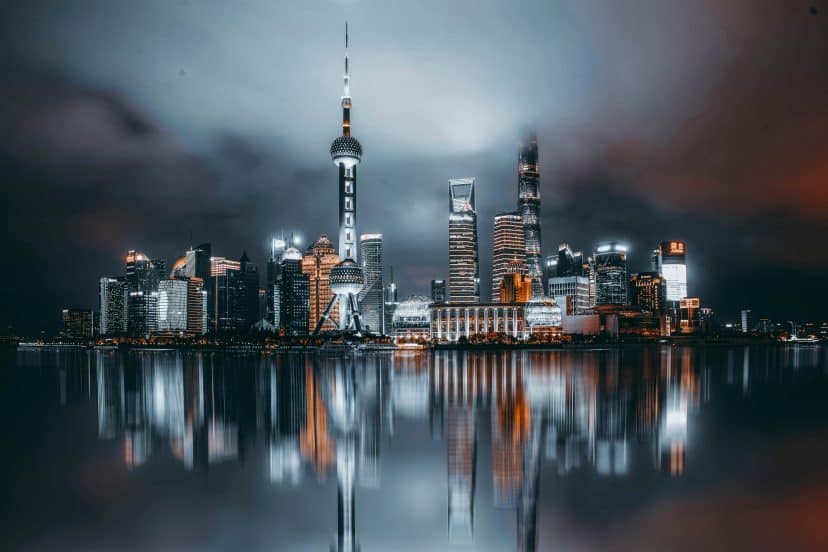






A week in Shanghai reveals more than its celebrated skyline. Explore the city’s changing rhythms, neighbourhood contrasts, practicalities and evolving waterfronts.


First impressions, and what follows
Shanghai makes an immediate impression: the broad sweep of the Huangpu, the concentration of towers in Pudong and the density of central streets can make the city seem both highly legible and difficult to grasp. Its best-known views are clear enough from the outset. What takes longer is recognising how the city connects, and how differently those connections feel across the day.
A week offers that extra time. It allows the first journey from airport to accommodation to become a familiar route, and an initially abstract metro map to become a practical way of joining together places that appeared separate on arrival. It also creates room to notice the contrast between a riverside promenade, a business district at commuter hours, a museum visit and the quieter stretch of pavement around a local breakfast shop or convenience store.
This is not a seven-day checklist. Shanghai is too extensive, and too varied within its individual districts, for a worthwhile stay to be measured by how many landmarks have been covered. A better approach is to let the week develop around repeat journeys, a small number of areas and enough unallocated time to respond to the weather, an exhibition, a reservation or a promising street encountered on the way elsewhere.
For return visitors, this slower pace also helps put recent changes in perspective. Shanghai has not become a wholly different city in five years, nor have all neighbourhoods changed in the same way. But the transport network has extended, waterfront ambitions have become more explicit, and the practical experience of moving between airports, business districts and public spaces has continued to evolve.

The Shanghai of the past five years: continuity alongside recalibration
The most dependable way to describe Shanghai’s recent evolution is through its infrastructure and public realm. These are changes that visitors can experience directly, without turning them into a single story about how the city’s residents live or work.
Public transport remains one of the clearest examples. The Airport Link Line began operating in December 2024, connecting Hongqiao Airport Terminal 2 with Pudong Airport Terminals 1 and 2 across 68.6 kilometres. Its initially published airport-to-airport journey time was about 40 minutes, making the Airport Link Line a useful addition for travellers whose arrival, departure or accommodation plans span both sides of the city.
The wider network has continued to grow as well. The opening of Line 18 Phase II in December 2025 added an east-west route in southern Baoshan, and Shanghai then had 21 operational rail lines. The city described the change as the extension of Metro Line 18; together with earlier expansion, it took the rail system beyond 900 kilometres. That scale does not remove the need to plan journeys, but it does make a longer stay less dependent on taxis and single-district sightseeing.
Along the water, the shift is less about one finished project than a continuing effort to make river and creek edges more connected and useful. Shanghai’s published plans for 2025–35 cover both the Huangpu River and Suzhou Creek waterfronts, with priorities including public space, streetscape and integrated development. These are plans rather than a guarantee that every proposal is complete. For visitors, though, they help explain why riverside areas increasingly reward attention as places to walk, pause and attend events rather than simply as viewpoints.
The commercial picture is more uneven. Official city figures show that total retail sales rose in 2025 while catering revenue declined, following weaker retail and accommodation-and-catering figures in 2024. That is a reminder not to turn broad economic data into assumptions about a particular street, restaurant or neighbourhood. Shanghai’s dining and shopping districts remain part of the city’s appeal, but they are not static displays, and a week here is better approached with curiosity than with expectations fixed years earlier.
The most dependable way to describe Shanghai’s recent evolution is through its infrastructure and public realm. These are changes that visitors can experience directly, without turning them into a single story about how the city’s residents live or work.Public transport remains one of the clearest examples.

Finding a daily rhythm beyond the skyline
For a stay of several nights, location is not merely about being near a landmark. It is about the journeys likely to be repeated: an early metro ride, a return after dinner, an airport transfer, or an easy walk to essentials. A base close to a useful station and within reach of ordinary daily services can make Shanghai feel considerably more navigable.
It is sensible to choose one or two areas as anchors rather than trying to cross the city at every opportunity. Repeat journeys make room for the unplanned: returning to a street at a different time, stopping in a park instead of rushing through it, or allowing a district to reveal its mixture of offices, housing, retail and local services. This is where a week differs from a very short break. The city becomes less a sequence of headline views and more a set of working connections.
Practical preparation matters. Shanghai’s official guidance says that overseas-issued cards can be used where the relevant payment-network logo is accepted, while cash can be withdrawn or exchanged. It also explains that international cards may be linked to Alipay or Weixin Pay, subject to the published terms and limits. Reviewing Shanghai’s payment guidance for overseas visitors before departure is worthwhile, particularly for travellers accustomed to relying on one payment method.
Connectivity deserves the same advance thought. Check international-roaming coverage and charges with your provider before travel. Shanghai’s visitor guidance also notes that short-term physical SIM cards may be available at international-traveller service centres at Pudong and Hongqiao airports, with passport-based purchase requirements. Arriving with a workable plan for data, maps and essential bookings removes a layer of friction from the first few days.
British citizens travelling on standard British passports should also check current UK entry requirements for China shortly before departure. At the time of the published guidance, qualifying visits of up to 30 days could be made visa-free until 31 December 2026, subject to the stated conditions. Passport validity and accommodation registration requirements should be confirmed for the individual trip; hotels normally complete residence registration for their guests.
Neighbourhood contrasts that become clearer over a longer stay
Puxi and Pudong remain helpful starting points, but they are not fixed opposites. Both cover a broad range of streets, buildings and daily routines. The value of a week is that it allows each to be seen in context rather than treated as a single attraction.
Central Puxi, particularly around Huaihai Road and People’s Square, suits visitors who want established city streets, public transport and cultural stops within a relatively compact working radius. It is an area where a museum visit can sit naturally alongside a walk, a meal or time spent observing the pace of the surrounding streets. The rhythm is often one of overlap rather than spectacle: commuters, shoppers, visitors and residents moving through the same central spaces for different reasons.
Shanghai Museum at People’s Square is one example of how practical details can shape a visit. Published guidance lists it as open from 9am to 5pm and closed on Mondays except public holidays; individual visitors generally do not need reservations, although popular exhibitions and peak periods can differ. A passport or other valid identification is required, so it is wise to check the latest information from Shanghai Museum at People’s Square before setting out.
Across the river, Lujiazui is where Shanghai’s financial and architectural ambitions are most conspicuous. The skyline is a familiar image, but a longer stay gives it a more practical dimension: it is also a working district, a transport hub and one part of a much larger Pudong landscape. The nearby Shanghai Museum East offers another reason not to view this side of the city only through observation decks and river panoramas. Its published visitor information lists Tuesday closures, passport or valid-ID entry requirements and hours that should be checked again before a visit. See the latest Shanghai Museum East visitor information for current arrangements.
Hongqiao and Gubei offer a different perspective again. These areas can appeal to visitors whose time in the city combines meetings, onward rail journeys or an airport connection with urban exploration. They are a useful counterweight to the idea that a Shanghai stay must orbit the Bund or the highest towers. The city’s size means that a base which supports the journeys you actually expect to make may be more valuable than one chosen purely for postcard proximity.
The city after dark, and the value of leaving space in the plan
Evenings in Shanghai need not follow a single idea of nightlife. They may mean a walk where waterfront access permits, dinner in a neighbourhood chosen for convenience rather than fashion, a cultural event, or simply a slower journey home through streets whose purpose has shifted since the working day. Around the Huangpu and Suzhou Creek, the city’s scale can feel different after dark: less like a sequence of views than a network of routes, crossings and pauses. In a city this large, the most memorable evening is not always the most elaborate; it may simply be the one that leaves time to notice the change in tempo.
Waterfronts are best treated as flexible rather than guaranteed. The city reported more than 800 major themed events across the Huangpu and Suzhou Creek waterfronts in 2025, while also outlining further access, pier and service improvements for the years ahead. That combination of programmed activity and continuing change makes waterfront access and programming worth checking close to the date, rather than assuming that an old map or social post reflects current conditions.
Leave room for changing weather, too. Summers are hot and humid, with frequent thunderstorms; the city’s rainy period is typically from mid-June to early July, while the usual typhoon season runs from late August to mid-September. These patterns, outlined in Shanghai’s seasonal weather patterns, cannot predict an individual week, but they do favour a lightly structured plan over an overbooked one.
Reservations, opening times and entry policies can change quickly. Keeping one or two evenings uncommitted is not a compromise; it creates space to respond to the city as it is that day, rather than only as it appeared in the itinerary.
Looking forwards: a city still being revised
Shanghai’s future is best understood as a direction of travel rather than a finished image. The next phase of waterfront planning is especially tangible. The city’s 2026–30 programme targets additional and upgraded green and public space along the Huangpu and Suzhou Creek, alongside 52 kilometres of newly connected waterfront across waterways and tributaries. These are stated targets, not current conditions, but the city’s 2026–30 river-and-creek plan indicates a continued emphasis on connections between public space, culture and everyday movement.
Transport will remain part of that revision. The metro is already extensive, while Line 19 has been identified by the city as under construction rather than operational. For visitors, the most noticeable effect may not be a dramatic transformation but an accumulation of easier links: between airports, residential areas, business districts and places that once felt outside a short visit’s practical reach.
It would be too neat to predict one future Shanghai from these schemes. Development arrives differently across districts, and public-policy ambitions take time to become daily experience. A more useful conclusion is that the city remains open to revision. That is one reason a week here rewards attention: familiar routes may reveal new uses and different connections without the city losing the contrasts that made it compelling in the first place.
Choosing a base for a week in Shanghai
Choose accommodation around the journeys you expect to make more than once. Central Puxi may suit visitors who value established shopping streets, museums and broad metro connections within a familiar daily radius. Pudong may be preferable for those who want the skyline and financial district close at hand, while Hongqiao can make particular sense when rail, airport or business commitments set the rhythm of the week.
The more useful question is not simply, “What is nearest to the Bund?” but “What will make the ordinary parts of this stay easier?” A straightforward airport arrival, a manageable journey home after dinner or the freedom to return to the same neighbourhood between wider explorations can shape a week more than postcard proximity.
For a longer stay, browse serviced apartments in Shanghai with those repeat journeys in mind. Compare live property information carefully before booking, including the exact location, current availability and the practical details that matter to your plans.
Finally, recheck travel documents, payment arrangements, weather forecasts and venue reservations shortly before departure. Shanghai rewards preparation, but it is often the space left around the plan that allows its shifting rhythms to come into view.