
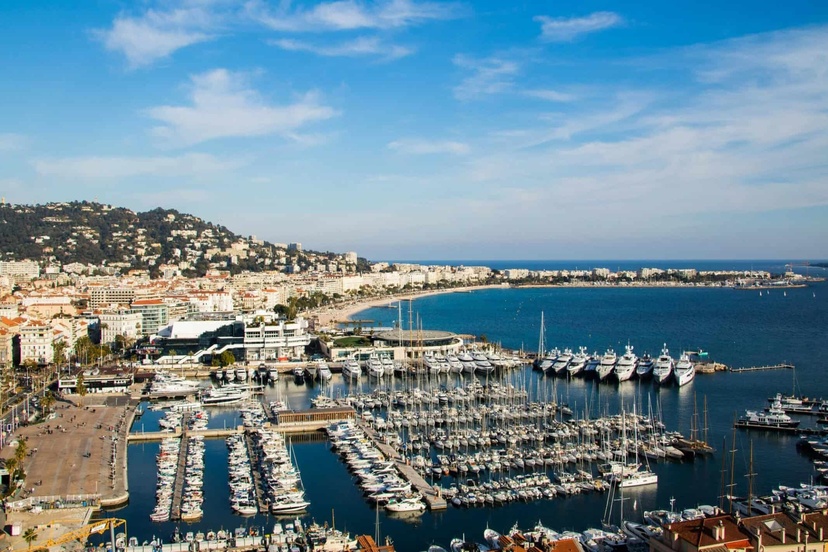


The French Riviera still attracts for good reason, but in 2026 it rewards a more informed kind of planning. Using Cannes as the main lens, this guide looks at what has changed over time, what still feels recognisable, and how Nice and Saint-Tropez fit into a smarter Riviera stay.


Introduction
The French Riviera still arrives in the imagination before it arrives in real life. For many people it remains a shorthand for sun, polished seafronts, café terraces, yachts, film glamour and a certain kind of European ease. In 2026, that image is not wrong, but it is incomplete. The Riviera still delivers beauty and spectacle, yet it increasingly rewards visitors who plan around access, timing and the kind of stay they actually want.
That is one of the clearest changes over time. The Riviera used to be sold more simply: come for the season, join the scene, absorb the atmosphere. Now the practical questions matter far more. Which place makes the best base? Can you move around easily without a car? When does a famous town feel energising rather than overwhelmed? How different is a short summer visit from a longer shoulder-season stay?
Seen through that lens, Cannes is a useful starting point. It sits between Riviera glamour and everyday functionality, between headline events and a more settled urban rhythm. From there, the differences with Nice and Saint-Tropez become clearer too.

What the Riviera promises, and what feels different now
The old Riviera idea was built on image, and image still matters here. Promenades, beaches, marinas and old-town streets continue to shape the coast’s appeal. So does the pleasure of public life: morning markets, late coffees, evening walks, and the simple fact that sea views sit close to dense town life.
What feels different in 2026 is not that the Riviera has lost its glamour. It is that glamour no longer explains enough. Visitors are often weighing convenience against atmosphere more carefully than before. Transport links, walkability, event periods and seasonal pressure now shape whether a stay feels smooth or exhausting.
This is especially noticeable when comparing the coast’s better-known names. Nice functions as the main arrival point for many Riviera stays because of regional access from Nice, including the airport link to Nice Saint-Augustin and frequent rail services along the coast. There is also a direct tram connection between Nice Airport and the city, which reinforces how practical Nice has become for onward travel as well as city breaks.
That kind of joined-up access matters more than it once did in trip planning. It does not replace the Riviera fantasy; it simply sits beside it.
What the Riviera promises, and what feels different nowThe old Riviera idea was built on image, and image still matters here. Promenades, beaches, marinas and old-town streets continue to shape the coast’s appeal.

What has changed over time on the French Riviera
Travel planning has become more transport-minded
One of the most visible shifts is the way people now organise a Riviera stay around movement rather than image alone. Rail-served places such as Nice and Cannes are easier to fit into a broader itinerary, while Saint-Tropez still asks for more deliberate planning. Official guidance on getting to Saint-Tropez makes that contrast plain: access is entirely possible, but it is less frictionless than arriving in Nice and continuing by train along the coast.
That does not make Saint-Tropez less desirable. It simply means that travellers often approach it more selectively, either as a focused stay or as a place best timed carefully.
Seasonality feels sharper
The Riviera has always had high and low moments, but the difference between them now feels more important to the overall experience. Major events can intensify this. In Cannes, for example, the May 2026 Cannes Film Festival dates ran from 12 to 23 May, a reminder that even outside peak summer there are periods when the city’s international visibility creates a very particular atmosphere.
More broadly, visitors often think in terms of shoulder season versus high season rather than treating the coast as one uniform destination. That is less about a documented behavioural revolution than about a practical reading of the Riviera as it is now: famous places remain rewarding, but the timing of a visit can change everything.
Expectations have widened beyond spectacle
Another change is subtler. People still come for beauty, prestige and the pleasure of being somewhere long mythologised, but stay quality now matters more in how destinations are judged. Walkability, calm, local routine and how easily a place supports several days or weeks away all shape decision-making.
There is good reason to be cautious here. There is no single dataset proving a Riviera-wide shift in motivation, and no strong primary source that quantifies social-media influence or changing crowd psychology in 2026. But the available evidence does support a more practical, infrastructure-aware way of planning: access, event calendars and urban usability are easier to verify than broad claims about why people travel.
What has not changed
For all that, the French Riviera still offers the contrasts that made it famous. The sea remains inseparable from the towns. Public space still matters enormously. Prestige still has a role, whether that means red-carpet associations in Cannes, grand urban seafront culture in Nice or the selective allure of Saint-Tropez.
There is also a continuity of ritual. People still come to sit facing the water, to move slowly between beach and town, to watch the afternoon become evening from a terrace, to enjoy places where everyday life and display are never fully separated. The Riviera still understands theatre, even when visitors now arrive with more practical expectations.
Why Cannes works as the overview lens
Cannes is useful because it captures several versions of the Riviera at once. It is recognisable worldwide, but not only for one season. The city’s Cannes’ major events calendar shows how deeply event culture is built into its identity, while the official announcement on Cannes beyond festival season underlines that the city maintains a substantial programme from September 2026 to the end of April 2027.
That matters because it helps explain why Cannes is more than a postcard backdrop. It can feel polished and high-profile, but it also has a structure that supports staying rather than merely arriving. Official information on getting around Cannes points to a compact, walkable city with local transport support and reinforced services during busier periods.
For visitors who want a Riviera base rather than a one-note experience, that balance is important. The Cannes hub is therefore a sensible place to start browsing stays. If you are looking for something close to the city’s calmer residential side, Californie Riviera Residence fits this more settled reading of Cannes. If immediate seafront access is the priority, Plage du Midi Apartment is a natural example without turning the city into a resort cliché.
Cannes, Nice and Saint-Tropez: how they differ in 2026
Cannes
Nice
Saint-Tropez
Nice remains the coast’s most complete urban counterweight to Riviera stereotype. Its UNESCO-listed winter resort heritage gives it historical depth beyond beach imagery, and for many travellers it feels the most naturally liveable of the three. Readers considering a longer or more everyday-style base can explore Nice.
Saint-Tropez, by contrast, still exerts a powerful pull precisely because it is so loaded with reputation. Yet reality matters here. Access is more effortful, and once there, movement can require patience and planning. The official pages on parking in Saint-Tropez are a useful reminder that practical constraints are part of the destination, not an exception to it. For some travellers that is part of the appeal; for others it means Saint-Tropez works better as a selective stay than a default base. Those weighing that choice can browse Saint-Tropez.
Who each place suits
- Choose Cannes if you want a Riviera base that balances image with ease: a compact, walkable city, strong regional rail connections, and enough year-round structure to support more than a purely scenic stay.
- Choose Nice if practical arrival, urban rhythm and day-to-day convenience matter most. With the airport, tram and coastal rail links all feeding into the city, it suits travellers who want the Riviera in a more usable, less stage-managed form.
- Choose Saint-Tropez if the name, atmosphere and sense of arrival are central to the trip, and you are willing to accept that access, parking and seasonal pressure are part of the experience rather than minor inconveniences.
None of these choices is universally better. The more useful question is what kind of stay you want to have once you are there: a polished base with flexibility, a fuller urban routine, or a place whose status and setting matter enough to justify the extra planning. The Riviera usually disappoints only when travellers book the most mythologised version of it rather than the one that fits how they actually want to move, stay and spend their time.
When the Riviera feels most rewarding now
The simple answer is: when expectation and timing align. If you want animation, events and visible prestige, busier periods can be exactly right. If you want ease, room to move and a stronger sense of local routine, shoulder-season timing is often more rewarding.
That does not mean the Riviera has become an off-season secret. It means that in 2026 it is best understood as a set of different experiences layered onto the same coastline. Cannes can be cinematic or practical. Nice can feel grand or everyday. Saint-Tropez can feel iconic or exhausting, depending on how and when you approach it.
Choose the Riviera for the right version of it
The French Riviera still draws crowds because the foundations of its appeal have not disappeared. The coast remains visually seductive, socially expressive and unusually rich in contrasts between sea, town and status. What has changed is the need to read it more accurately.
In 2026, the Riviera works best when visitors choose with intention: not the loudest image, but the place and timing that suit their stay. Cannes is often the clearest lens for that decision because it sits between glamour and practicality so effectively, while Nice and Saint-Tropez show the two poles of the wider Riviera experience.
If you are moving from inspiration to planning, you can start with Cannes accommodation options, compare with stays in Nice, look at Saint-Tropez accommodation, or browse all Locations for a broader view.