
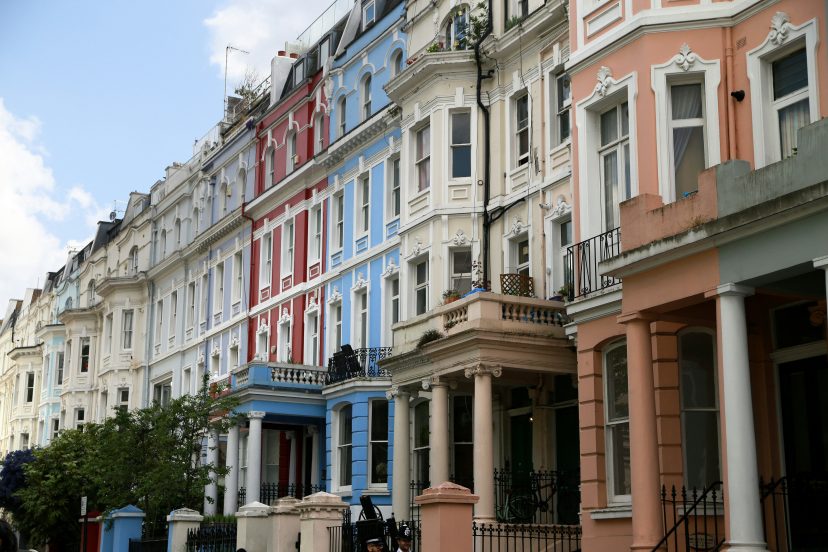






Notting Hill offers a different kind of luxury in London: less formal than prime central districts, more rooted in daily life, and often better suited to longer stays that need space, rhythm and neighbourhood character.


Notting Hill, when London needs to feel lived in
Some parts of London impress immediately. Others make more sense after a few mornings, when the routine begins to take shape. Notting Hill belongs firmly to the second kind. Its appeal is not only visual, though the stucco terraces, long crescents and carefully kept corners certainly help. It is also the way a day begins here: coffee, a food shop, the school-run tempo, or a slow walk to the Tube before the rest of the city opens around you.
For long-stay guests and relocating families especially, that distinction matters. A luxury home in Notting Hill can feel less like a polished base for passing through London and more like a way of joining it for a while. That is the neighbourhood’s strongest appeal: not in show, but in how easily it lets you settle.

What makes Notting Hill distinct for a longer stay
Within this wider London campaign, Notting Hill is the most domestic choice. Knightsbridge brings central prestige and a more formal kind of polish. South Kensington is especially strong for museum-shaped family routine. Notting Hill, by contrast, tends to suit people who want their stay to have more grain to it: a recognisable neighbourhood rhythm, elegant residential streets, and a sense that errands, meals and evenings at home matter just as much as any headline address.
That does not make it sleepy. The area holds several moods within a relatively compact stretch of west London. Around Notting Hill Gate, daily convenience is easy to spot, including food shopping on Notting Hill Gate. The borough also sustains a clear market culture, with official listings for Portobello and local markets including Portobello Market, Golborne Road and Notting Hill Gate Farmers’ Market. Turn a few streets away and the register changes: quieter terraces, more private front doors, and a stronger sense of ordinary residential life continuing behind the stucco.
That contrast is central to choosing the area well. Notting Hill is not one single atmosphere, and that is part of its value. It tends to work best for guests who enjoy variation and do not expect every street to express the same version of London.
Within this wider London campaign, Notting Hill is the most domestic choice. Knightsbridge brings central prestige and a more formal kind of polish.

The daily pattern: market energy, calm crescents and west London ease
The image many people carry of Notting Hill is market-led, and not wrongly. Portobello Road remains one of the area’s defining spines, and the council describes it as a place of heritage, character and community, while also noting operational restrictions and planned public-realm works in Portobello Road’s evolving streetscape. In practice, this means life here has rhythm. Some stretches feel lively, busy and visitor-facing; others, only a short distance away, feel measured and almost secluded.
That mixture can be ideal for a long stay. You can have a Saturday with market colour, local food shopping and people moving through the neighbourhood, then come back to a quieter street where the evening settles. For many families and longer-stay leisure travellers, that balance is more useful than constant central intensity.
There is also a practical west London ease to the area. Notting Hill Gate Tube connections support movement into the rest of London via the Central and District lines, and TfL’s broader mapping places the neighbourhood naturally within west and central London routes. That makes it feasible to spend the morning locally and still reach meetings, museums or dinner elsewhere without making the whole day feel logistical.
Green space adds to that feeling of liveability. Kensington Gardens is close enough to shape routine, especially for those travelling with children or simply wanting room to walk, pause or reset. The Royal Parks highlights family-friendly open space and attractions in Kensington Gardens nearby, which helps explain why this side of London often feels easier to inhabit over several weeks rather than a few nights.
Why luxury makes particular sense here
In some neighbourhoods, luxury is mainly about address. In Notting Hill, it is often about how well a home supports ordinary life at a high standard. A generous kitchen matters more when local shopping is part of the routine. A proper living room matters more when the area encourages evenings in rather than defaulting to restaurants every night. Bedrooms with real privacy matter more when a stay is long enough to develop habits, work patterns or family structure.
This is why serviced homes and design-conscious rentals often feel especially natural here. The neighbourhood rewards guests who want to cook, host quietly, unpack properly and inhabit the space rather than orbit around it. Those exploring serviced accommodation in London often find that Notting Hill answers a very specific brief: style without formality, comfort without a hotel mood, and a location that feels recognisably London without being defined only by visitor traffic.
For those specifically drawn to this part of west London, homes such as the Notting Hill Luxury Home or the Portobello Road Townhouse show the kind of stay the area lends itself to: private, spacious, and shaped around neighbourhood living rather than a lobby-and-lift experience.
Who Notting Hill tends to suit best
Notting Hill usually works well for three kinds of guest:
- Long-stay leisure visitors who want London to feel personal rather than purely itinerary-led.
- Relocating families who need calmer rhythms, domestic space and access to parks, transport and daily shopping.
- Design-aware travellers who care about architecture, interiors and the texture of a neighbourhood, not just postcode prestige.
It can be particularly appealing if your ideal London day includes time at home. That might mean breakfast around a family table, a grocery stop on the way back from the Tube, children burning off energy in the park, or simply the pleasure of returning to a street that feels residential rather than performative.
The trade-offs worth knowing
The qualities that make Notting Hill attractive also come with limits. Around the main market areas, especially near Portobello Road, atmosphere can turn busy quickly. Visitor footfall is part of the area’s character, but it also means the neighbourhood is not uniformly quiet, and that is worth understanding before booking. Event periods can affect movement and station operation too; TfL publishes official guidance such as Carnival transport changes at Notting Hill Gate in relevant periods, a useful reminder that local rhythm is not identical all year.
Transport is good, but not in the same way as staying further into the prime central core. Notting Hill gives you west London ease rather than the immediate intensity of Knightsbridge or Mayfair. If you want the quickest access to luxury retail, a more formal hotel-service culture and an address that signals prime central London instantly, this part of town may feel a little too relaxed. If you want to be very close to the museum district and build days around that pattern, South Kensington may prove more practical.
Accessibility needs should also be checked live rather than assumed. Period architecture, varied entrances and Tube conditions can all matter in practice. TfL provides current guidance through the TfL step-free Tube guide and the TfL avoiding stairs guide, which is the safest route for confirming present conditions before travel.
When Knightsbridge or South Kensington may suit better
| Neighbourhood | Usually suits you if… | What Notting Hill offers instead |
|---|---|---|
| Knightsbridge | You want polished central prestige, luxury retail and a more formal prime London feel. | More neighbourhood texture, more domestic rhythm, less emphasis on display. |
| South Kensington | You want museum-led family practicality and a highly structured cultural routine. | A more characterful residential atmosphere and a looser west London pace. |
| Notting Hill | You want to feel settled in, with markets, parks and elegant home living shaping the stay. | A London experience that leans towards living well rather than simply staying well. |
A stylish base for people who want to belong, briefly
Luxury in London is not always defined by the busiest corner or the most immediately recognisable address. Sometimes it lies in waking up somewhere that lets the city become legible: the same café two mornings running, the same walk to the Tube, the same corner shop beginning to feel familiar. Notting Hill does that unusually well. It offers beauty, certainly, but also rhythm, privacy and the practical grace of a neighbourhood that can hold everyday life with ease.
If that sounds closer to the kind of stay you want, it is worth exploring more London homes and comparing them with the wider Still Life Global apartments list. For readers weighing London’s smartest districts, Notting Hill makes the clearest case for something slightly different: not simply a luxury base, but a luxury way of settling in.