






Paris feels very different when your days are shaped by meetings, commutes and the need to function well all week. This guide looks at the practical rhythm of a working stay, from arrival choices and transport to evening downtime and picking a base that suits business rather than fantasy.


Introduction: Paris when work sets the schedule
Paris is one of those cities that arrives in the imagination fully formed. People picture terraces, handsome boulevards and the kind of light that makes even administrative errands seem faintly cinematic. Then work takes over. The question is no longer whether a street is beautiful, but whether it gets you to a 9am meeting without unnecessary drama, whether you can eat well without sacrificing half the afternoon, and whether your evening will restore you or merely leave you more tired.
That shift does not make Paris less appealing. If anything, it makes the city more revealing. A working week strips away the postcard layer and brings its real character into focus: routines, trade-offs, quiet efficiencies and a handful of small frictions that matter far more on day five than they do on day two of a leisure break.
For corporate travellers and professionals considering a longer stay, Paris is best understood as a city that rewards adjustment. It can be smooth, energising and deeply civilised, but usually not if you expect it to organise itself around your assumptions. It works better when approached on its own terms, with attention to pace, timing and the practical realities of each neighbourhood.

Monday arrival: first impressions beyond the fantasy
The first practical decision in Paris usually reveals the gap between image and usefulness. On paper, a romantic address sounds ideal. In practice, after a flight or train journey, a base with sensible connections, nearby essentials and a straightforward route to tomorrow morning often proves the better choice.
Arrival itself can be simple, but only if the transport element is handled with a little care. Official guidance on how Paris transport ticketing works is worth checking before you travel, particularly because ticket types are not always interchangeable across modes. For airport arrivals, the right option depends on timing, luggage and your tolerance for uncertainty. If you want cost certainty by taxi, the state-published guide to fixed Paris airport taxi fares is useful. If you are arriving late, official information on airport links and late-night public transport helps clarify what is still running.
The other early lesson is that centrality is not quite the same as convenience. A map can flatter a location; a working week tests it properly. Five elegant minutes on a booking page can translate into four line changes, a long walk with a laptop bag, and the slow recognition that a famous district is serving your vanity better than your schedule.
Paris also has a way of disguising the effort of getting across it. It can appear compact, but cross-city movement accumulates quickly. The city tends to feel easiest when each day follows one principal axis of travel rather than a series of repeated diagonals.
The first practical decision in Paris usually reveals the gap between image and usefulness. On paper, a romantic address sounds ideal.
How the working day actually moves in Paris
Mornings in Paris tend to begin with a choice between ritual and efficiency. The city has a strong café culture, but that does not mean every working traveller has time to linger over it. More often, breakfast is handled quickly: a coffee at the counter, something from a bakery, or a simple start where you are staying. On a week built around meetings, walking and public transport, those small routines do more than visitors sometimes expect.
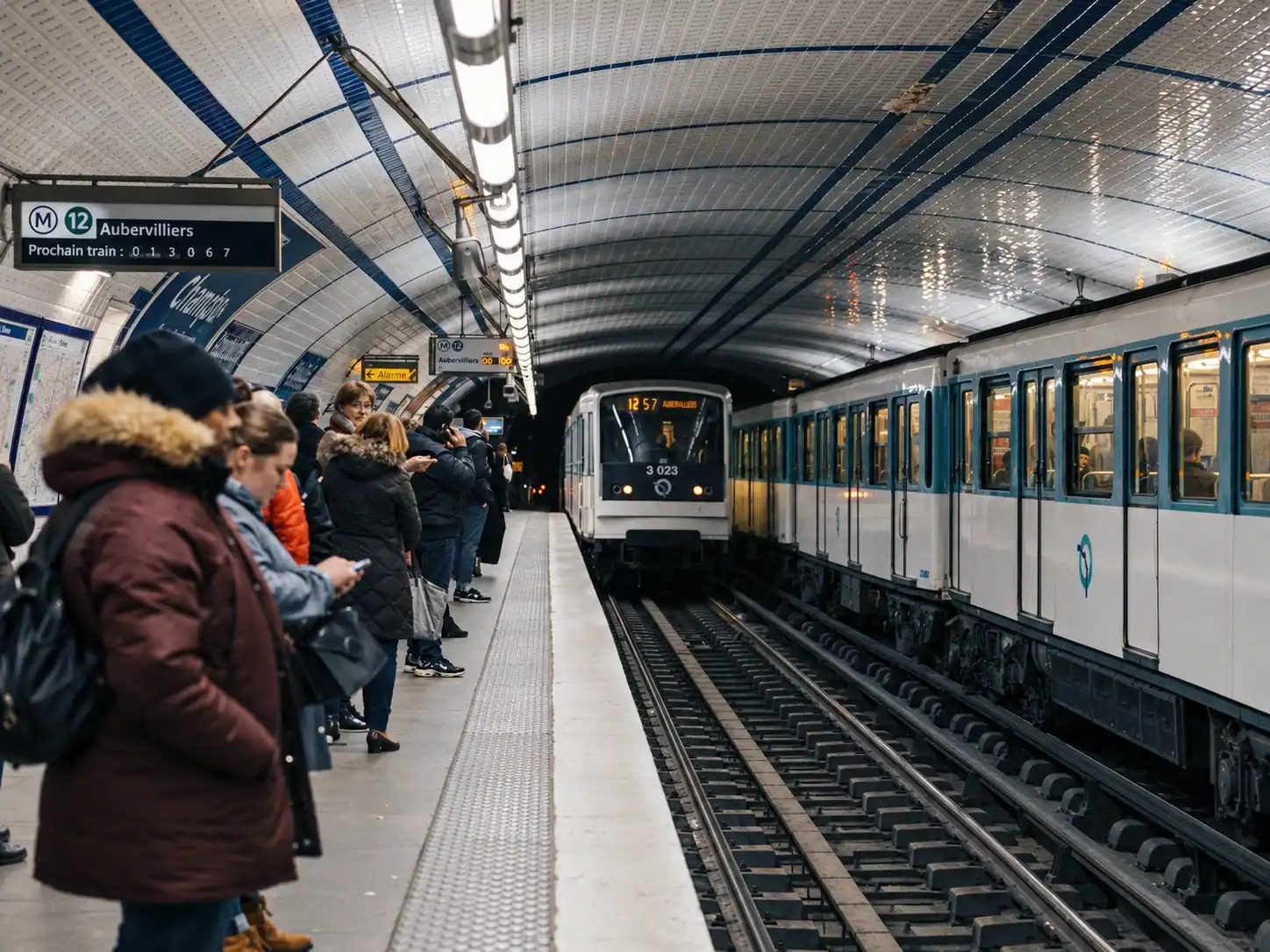
Transport is often what determines whether the day feels smooth or faintly adversarial. The Metro is usually the fastest option for dense central journeys; walking can make more sense than it first appears when appointments are reasonably close together; taxis become useful when weather, luggage or timing matters more than economy. What tends not to work well is treating one mode as the answer to everything.
For most business stays, it is worth understanding the basics of Paris transport tickets and fares before you need them, rather than trying to decode a machine at pace while everyone else seems to know exactly what they are doing. It is also sensible to check live network disruptions before travelling, particularly for airport links or longer cross-city journeys. The network is extensive, but not immune to delays or interruptions.
The working culture itself often favours courtesy and a slightly more formal opening than some UK travellers may be used to. Titles, clear scheduling and a polished presentation still count in many professional settings. That does not make Paris unusually rigid. It simply means that familiarity is often expected to follow the meeting, not precede it.
Lunch can influence the shape of the day more than visitors expect. Not because every business lunch is elaborate or especially long; if anything, they are less dominant than they once were. But food still has a role in the day’s rhythm, and availability does not always bend neatly around your diary. Leave meals entirely to chance and Paris may eventually point out the weakness in that plan.
By evening, the wisdom of your base becomes much clearer. An address that looked only marginally better on a map can feel decisively better when it removes an extra interchange and twenty unnecessary minutes from the journey home.
The useful Paris that tourists often miss
The most valuable version of Paris during a work trip is rarely the one on a highlights list. It is the city of reliable basics: the bakery that solves breakfast in three minutes, the supermarket that saves you from another late restaurant meal, the pharmacy you are relieved to find nearby, the quieter street or square that gives you ten decent minutes between one obligation and the next.
Much of Paris is well served for daily essentials, and the city itself points out that everyday essentials are often close at hand, even if convenience is not perfectly uniform in every pocket. For a week-long stay, that matters more than many visitors realise. The useful test of a neighbourhood is often mundane: whether breakfast, water, fruit, a painkiller, a phone charger or something simple for supper can be dealt with on foot and without effort. Neighbourhood competence is not glamorous, but it is what keeps a work trip humane.
This is also where Paris reveals its more practical charm. A canal-side stretch, a small square, a bench near a mairie, or a calmer residential street can do more for an overfilled day than a famous monument viewed while checking emails. The city has plenty of these in-between spaces: not destinations in themselves, but the sort of places where the pace drops slightly and your head follows.
And then there are the contingency details that seasoned travellers quietly prize. Knowing where to find pharmacies and urgent care in Paris is not the glamorous part of travel planning, but it is the sort of knowledge that makes a week feel manageable rather than fragile. In the same category are the unshowy supports of a working stay: a Monoprix or Franprix nearby, a decent boulangerie on the route out, and some sense of which streets still feel functional when the day runs later than planned.
If you need somewhere to work between appointments, coworking options exist across the city, although whether you need one depends on how much privacy, quiet or reliable seating your day requires. Paris can be generous to the roaming worker, but it does not always guarantee that every attractive café is thrilled to become a branch office. On a busy weekday, the most useful version of the city is often the one that helps you keep moving with minimal negotiation.
What catches people out during a working week
Paris is not difficult so much as unforgiving of loose planning. On a leisure trip, small inefficiencies can pass as atmosphere. During a working week, they accumulate into missed time, extra decisions and avoidable fatigue.
One of the first things that catches people out is opening-hours drift. Broadly, many shops trade in the daytime from Monday to Saturday, but smaller businesses may still close at lunch, some areas feel noticeably quieter on Mondays, and Sunday remains inconsistent outside the zones and sectors where trading is more liberal. In practical terms, it is unwise to assume that the chemist, grocery shop or useful lunch place nearest your accommodation will always be available exactly when your schedule allows.
Noise is another issue that looks minor on a map and much less minor at midnight. A beautiful, lively area can still be the wrong base for a work stay if it brings late terraces, heavy footfall or traffic that never quite settles. Paris treats environmental noise as a real quality-of-life matter, and that feels especially relevant when you are relying on decent sleep to get through several consecutive workdays. The useful question is not whether a district is attractive, but whether it stays manageable at the hours when you need to recover.
Then there is the simple geography of effort. Paris can look compact, particularly in the central arrondissements, but repeated cross-city movement has a way of exposing every weak choice in your planning. One long journey is tolerable; two or three in a day, in work clothes and carrying a laptop, can make the city feel far larger than the map implied. For a longer stay, being near the right Metro line, station or main axis of travel often matters more than being in the prettiest part of town.
Business culture can also surprise people, though usually in a subtle rather than dramatic way. A slightly more formal opening, careful politeness and a readiness to follow the room’s tone are all useful. That does not require stiffness. It simply means that in Paris, as in many professional settings, reading the register before trying to relax it is often the safer instinct.
The broader lesson is straightforward: choose for routine, not romance. Check what is open near you, think about the return journey as much as the morning one, and treat quiet, proximity and ease as working assets rather than secondary comforts.
Evenings in Paris when you are not really on holiday
Evenings on a work trip have their own kind of truth. The imagined version involves finishing at a civilised hour, drifting across a bridge, eating memorably and perhaps taking in some culture before turning in restored. The weekday reality is usually quieter and, often, more satisfying: a short walk, a good supper, a little unstructured time, then back to somewhere that allows the day to end properly.
Paris is especially good at this softer register of pleasure. It does not require every evening to become an occasion. After a full day of meetings, the city often feels at its best when taken lightly. A neighbourhood meal and a familiar route home can be more reviving than an ambitious plan on the far side of town.
That said, evening atmosphere changes noticeably by area and season. Official guidance on Paris nightlife and noise realities is a useful reminder that lively districts bring trade-offs as well as charm. Areas near the Seine, the Canal Saint-Martin and other popular social stretches can be very appealing after work, but they may also be louder and later than a tired traveller really wants.
The practical distinction is straightforward: do you want your evenings to feel animated or restorative? In Paris, both are easy to find, but not usually from the same address.
Choosing the right base for a week of work
The best base for a working week in Paris depends less on fantasy and more on the shape of your days. Broadly, three approaches tend to make sense.
1. Transport-led central
If you have meetings in several parts of the city, centrality paired with strong connections usually beats prestige for its own sake. Areas linked to major stations or dense business-and-service zones can reduce friction across the whole week. This is where Paris serviced apartments can make particular sense, especially if you want more space to work, keep food on hand and reset in the evenings.
For rail-linked arrivals or travellers who want practical weekday movement over neighbourhood theatre, the Gare de l’Est Aparthotel is a straightforward example of a functional business base.
2. Office-adjacent business convenience
If your work is concentrated in a major employment district, reducing the daily commute may be the smartest luxury of all. La Défense, in particular, is exceptionally well connected and built around weekday business movement. For travellers with offices there, La Défense Rue de l’Industrie Aparthotel is the sort of option that aligns with routine rather than sightseeing ambition.
3. Mixed, local-feeling neighbourhood base
Some travellers want a week that functions well but still feels connected to ordinary city life. In that case, a more residential-feeling area with shops, food options and walkable evenings can be a good compromise, provided transport remains reasonable. The Canal Saint-Martin Retreat suits that logic for readers who prefer character and local rhythm, while still keeping practicality in view.
Whichever type you choose, a full week usually benefits from more than a bed and a kettle. Space, a kitchen and the ability to spread out your day can make the difference between merely staying in Paris and actually functioning well there.
Final takeaway: Paris rewards adjustment, not fantasy
Paris can be superb for work, but usually not in the way first-time fantasies promise. Its strengths during a business stay are quieter: density, daily convenience, strong transport, good food within reach, and neighbourhoods that reveal their value gradually through use rather than spectacle.
The city becomes easier once you stop asking it to perform and start asking it to support your week. That means choosing your base by routine, not reputation; allowing for meal timing and transport reality; and giving proper weight to small comforts such as nearby shops, calmer evenings and shorter journeys.
If your next visit includes a little more leisure, it is worth exploring how to see Paris differently on a second visit. But for the working week itself, the lesson is simpler. Paris is at its best when you plan for the city that exists between meetings, not just the one on the postcard.