
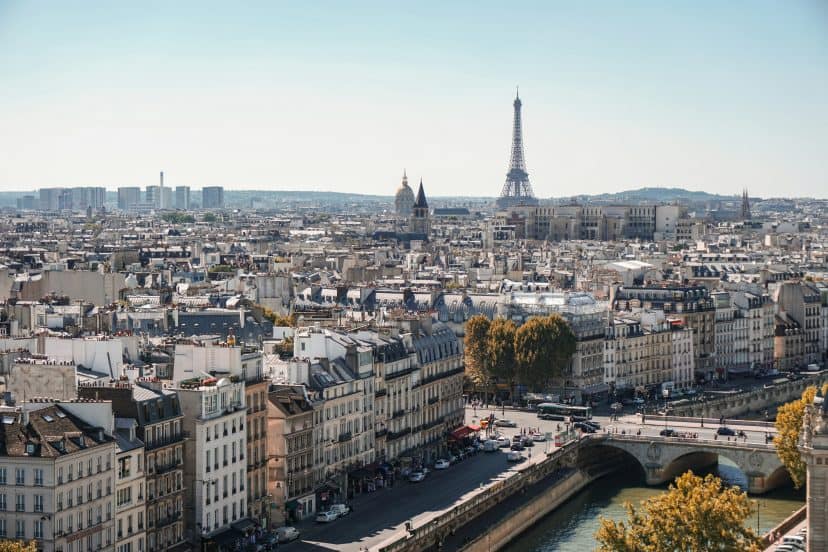




Paris often becomes more rewarding once you stop trying to see everything. Here is how to return to the city through neighbourhoods, smaller museums, markets, parks and a better daily rhythm.


Why Paris often improves on a second visit
The first time in Paris, many travellers move through it as if sitting an exam they forgot to revise for. There is a faint pressure to perform the city correctly: to queue where everyone queues, to cross town because the map insists it is sensible, to fit so much into the day that the stops become a tick-box exercise. The Eiffel Tower appears, the Louvre delivers, the grand avenues look exactly as promised. You leave with proof, but not always with much room left for mood.
Come back, and Paris usually loosens. Once the obligation to “do” it has worn off, the city becomes easier to read. You notice how much better it works in portions: one neighbourhood that holds a morning together, one museum that gets your full attention, one lunch that is allowed to become the centre of the day rather than a logistical pause. A second or third visit is rarely improved by hunting for contrived secrets. It improves when you start making sharper choices about pace, scale and what sort of day you actually want to have.
That shift can be surprisingly small. Perhaps you begin at a market rather than a monument, led by crates of fruit, warm bread and the smell of roast chicken instead of a skyline. Perhaps you spend an hour in a smaller museum that tells you something about Paris itself, then let the afternoon gather shape street by street. Or perhaps you choose an area simply because it rewards walking well. Paris has a habit of giving more back when you stop trying to extract everything at once.

Stop chasing icons and start choosing neighbourhoods
One of the simplest ways to enjoy Paris more deeply is to plan by area, not by headline attraction. Repeat visitors usually get more from the city when they stop zigzagging across arrondissements and let a district set the tone of the day.
The Marais is a good example: dense, walkable and easy to fill without force. In the space of a few streets, the mood keeps changing. There are older facades and narrow passages, small museums tucked into grand town houses, café terraces that spill gently into the pavement and shops that make browsing feel like part of the outing rather than a separate task. You can move through it at a natural pace, then keep going into the evening without feeling you have relocated entirely. If that is the kind of compact, central return trip you want, you could stay in the Marais and build your days from there.
Elsewhere, the canal offers a looser version of Paris. Around Canal Saint-Martin, the point is less to tick off sights and more to drift: iron footbridges, tree-lined water, side streets, bookshops, casual places to stop and the pleasure of not needing an agenda every half-hour. It is a part of the city that reveals itself in fragments rather than set pieces. Paris’s tourist office even suggests a Canal Saint-Martin evening walk up towards La Villette, which captures that unforced, lingering mood well.
Then there are areas such as Butte aux Cailles or Batignolles, where the draw is not a famous monument but a more residential pattern of streets, shops, terraces and parks. The appeal here is cumulative. A corner bakery, a little square, a row of apartment buildings catching the late light, a market bag on someone’s handlebars: none of it is spectacular on its own, which is precisely why it can feel refreshing on a second visit. In Butte aux Cailles, current city plans also point to an improving promenade around Butte aux Cailles, which suits the area’s strolling appeal. None of this means these places are somehow untouched. It means they work better for travellers who want to spend time in Paris rather than simply pass through it.
One of the simplest ways to enjoy Paris more deeply is to plan by area, not by headline attraction. Repeat visitors usually get more from the city when they stop zigzagging across arrondissements and let a district set the tone of the day.The Marais is a good example: dense, walkable and easy to fill without force.

What to do instead of repeating the same top-tier attractions
A return trip does not have to mean ignoring the great institutions. It often means using them more intelligently. Rather than attempting the whole Louvre again, give yourself permission to go for a single wing, a short focused visit or a well-timed slot. The point is not to conquer the museum but to recover your attention inside it. In summer 2026, reservation rules matter even more, so it is wise to check current Louvre reservation rules before you build a day around it.
The same principle applies across the city. One museum, properly seen, is usually more satisfying than two skimmed in a hurry. The Musée Rodin and Musée Carnavalet are especially good for repeat visitors: one manageable and sculptural, the other rooted in the story of Paris itself. At Rodin, the scale lets you pause rather than push on. At Carnavalet, the city appears through rooms, objects and fragments of daily life, which can sharpen your sense of the streets outside. Smaller house museums and specialist collections can also restore a sense of proportion after the scale of the blockbusters.
Musée Bourdelle is another strong option for travellers who have already done the major circuit and want something calmer. So is Maison de Victor Hugo, though with smaller venues especially, opening patterns and temporary ticketing exceptions should always be checked close to your travel dates.
You can also step sideways from the museum trail altogether. The city’s Paris covered passages offer a different way of reading the city: commercial history, shifting architecture, glass roofs, old signage and a form of wandering that feels distinctly Parisian without requiring a booking slot. They slow your eye in useful ways. You begin looking up at painted ceilings, across tiled floors, into shop windows and through narrow transitions from one century’s city to another.
A better repeat-visit cultural plan
- Revisit one major museum briefly rather than attempting a full sweep.
- Add one smaller museum that sharpens your sense of the city.
- Keep one unbooked walking stretch for passages, churches, bookshops or river crossings.
- Check entry rules and opening days shortly before you go, especially for summer travel.
Paris by daily rhythm: mornings, afternoons and evenings that feel more local
Paris makes more sense when you travel through its day rather than against it.
Mornings are the easiest place to begin differently. This is the time for bakery runs, quieter streets and food markets before the city turns outward. Shutters are still half-closed, café chairs are being set out, delivery vans are pulling away and the pavements feel briefly claimed by residents rather than day-trippers. The official guide to Paris market days is genuinely useful here, because market schedules vary and a good plan depends on the day you are actually in the city.
Afternoons benefit from restraint. Pick one museum, one shopping street or one district walk, then leave room for drift. A bench in a garden, an hour by the river, a late lunch that stretches longer than planned: these pauses are often what make a second trip feel less extractive and more memorable. Paris’s major green spaces are also practical tools, not just scenic detours. Early park openings make it entirely possible to start the day outside before queues form elsewhere.
Evenings, meanwhile, do not need to end at the same postcard viewpoints. Around the canal, the city’s own current guides describe a lively social stretch of bars, bistros and waterside movement, and point to growing Canal Saint-Martin nightlife without requiring you to commit to a big night out. Elsewhere, evening can simply mean a good neighbourhood restaurant, the scrape of chairs on the pavement, glasses catching the last light and a walk home through streets that have softened after office hours. Sometimes the best Paris evening is simply a neighbourhood dinner followed by a walk.
Neighbourhood ideas for travellers who think they already know Paris
If you feel you have already “done” Paris, the answer is often to choose a district whose pleasures are cumulative rather than spectacular.
Bastille and Ledru-Rollin
This part of the city works well for travellers who like movement and food-led days. You have the broad energy of Bastille, market life nearby, and streets that feel lived in rather than ceremonial. The official page for Marché Bastille confirms its place on Boulevard Richard-Lenoir, making it a useful anchor for a morning. Around it, the neighbourhood has enough bustle to keep things lively without forcing you into a monument-first routine. A base here also keeps you connected without pushing you back into the first-timer script. If that suits your style, you could stay in Bastille.
Canal Saint-Martin
Good for a more contemporary, informal return to Paris. The canal is not about monumental beauty in the classic sense. It is about atmosphere, bridges, strolling pace and the ease of filling an afternoon and evening without overplanning. The city unfolds here through ordinary pleasures: pausing on a bridge, watching the water traffic shift the mood of the towpath, turning off into a side street for a coffee or a browse. Travellers who want that softer structure may prefer to stay near Canal Saint-Martin.
Batignolles and the parks of the north-west
Batignolles suits repeat visitors who want to remain in Paris proper while leaning into a calmer residential tempo. Market life, neighbourhood restaurants and nearby green space help create days that feel less staged. There is enough going on to fill your time, but rarely the sense that you are being funnelled from one famous sight to the next. If that sounds right, it makes sense to stay in Batignolles rather than in a more monument-driven base.
Butte aux Cailles
For walkers, this is one of the more appealing shifts away from the familiar centre. The streets are narrower, the scale is more intimate and the pleasure lies in wandering rather than arriving. Murals, corner bars and small changes in level give the area its texture. It is best approached as an area to stroll and notice, not to conquer.
Île Saint-Louis and Saint-Germain
If you still want classic central Paris, these can work well on a return visit, provided your expectations are sensible. They are not secret and they are not empty. But if you use them for early walks, slower meals and a less frantic schedule, they can feel more graceful than a landmark-chasing base. In the morning especially, when bridges are quieter and the shopfronts are only just opening, their appeal can be easier to understand. Travellers wanting that kind of central footing can also browse wider options for Paris serviced apartments.
Common mistakes repeat visitors still make
Even on a second or third trip, it is easy to fall back into habits that flatten the city again.
- Trying to recreate the first visit instead of designing a new one.
- Assuming smaller museums can always be entered spontaneously.
- Booking too many meals and exhibitions, leaving no room for neighbourhood drift.
- Treating cross-city transport as frictionless.
That last point matters more than many travellers expect. Summer 2026 works affect multiple lines across the wider network, so it is worth taking five minutes to check transport works before crossing the city. On a return trip especially, there is no great prize in spending half the day in transit because you built an itinerary around distant points instead of adjoining neighbourhoods.
It is also worth resisting the idea that less famous automatically means more authentic. Some districts are quieter in feel, some are more residential, and some reward walking more than landmark zones do. But Paris is still Paris: popular, layered, sometimes expensive, and rarely improved by mythmaking.
Where to stay when the goal is a more lived-in Paris
For a return trip, accommodation matters less as a prestige marker and more as a practical frame for the days you want to have.
- Marais: best for walkable culture, smaller museums and compact day-to-evening flow.
- Bastille: useful for food, market energy and lively but workable centrality.
- Canal Saint-Martin: a good fit for slower, more contemporary neighbourhood wandering.
- Batignolles: suited to travellers after a quieter residential pace.
- Île Saint-Louis or Saint-Germain: central and atmospheric, if you want classic Paris without structuring every day around landmarks.
The key is not to chase the most famous postcode. It is to choose a base that reduces unnecessary travel and matches the version of Paris you are trying to revisit.
The Paris return-trip mindset
All of which leads to a slightly different way of being in Paris. The most satisfying return trips tend to have fewer claims on them: fewer bookings, fewer districts, fewer attempts to prove that every hour has been impeccably used. In their place come the things that give the city its texture: a market in the morning, one museum that properly holds your attention, a pause on a park bench, a side street followed out of curiosity, a dinner that runs late, a walk home through a neighbourhood that has begun to feel briefly familiar.
That is not less Paris. More often, it is how you finally get more of it. Returning is not a fallback or a lesser version of the first trip; for many travellers, it is the point at which the city becomes clearer, more generous and easier to inhabit for a few days. And once you have seen Paris that way, it is difficult not to want to come back and do it again.