






Hampstead is not the most obvious first base for London, which is part of its appeal. This is a neighbourhood people choose when they want the capital within reach, but not pressing in on them all day. From steep streets and bookshops to the Heath and easy Tube links, Hampstead offers a distinctive first impression and an even stronger reason to return.


Why Hampstead stands out on a first London trip
Many first-time visitors to London start with the same logic: stay as central as possible, keep the landmarks close, and worry about neighbourhood character later. Hampstead attracts a different kind of traveller. Rather than putting pure proximity first, it offers something more rooted: a stronger sense of London as a lived-in place, legible in the steep rise and fall of its streets, the compact shopfronts, and the way the high street quickly slips into quieter residential turns.
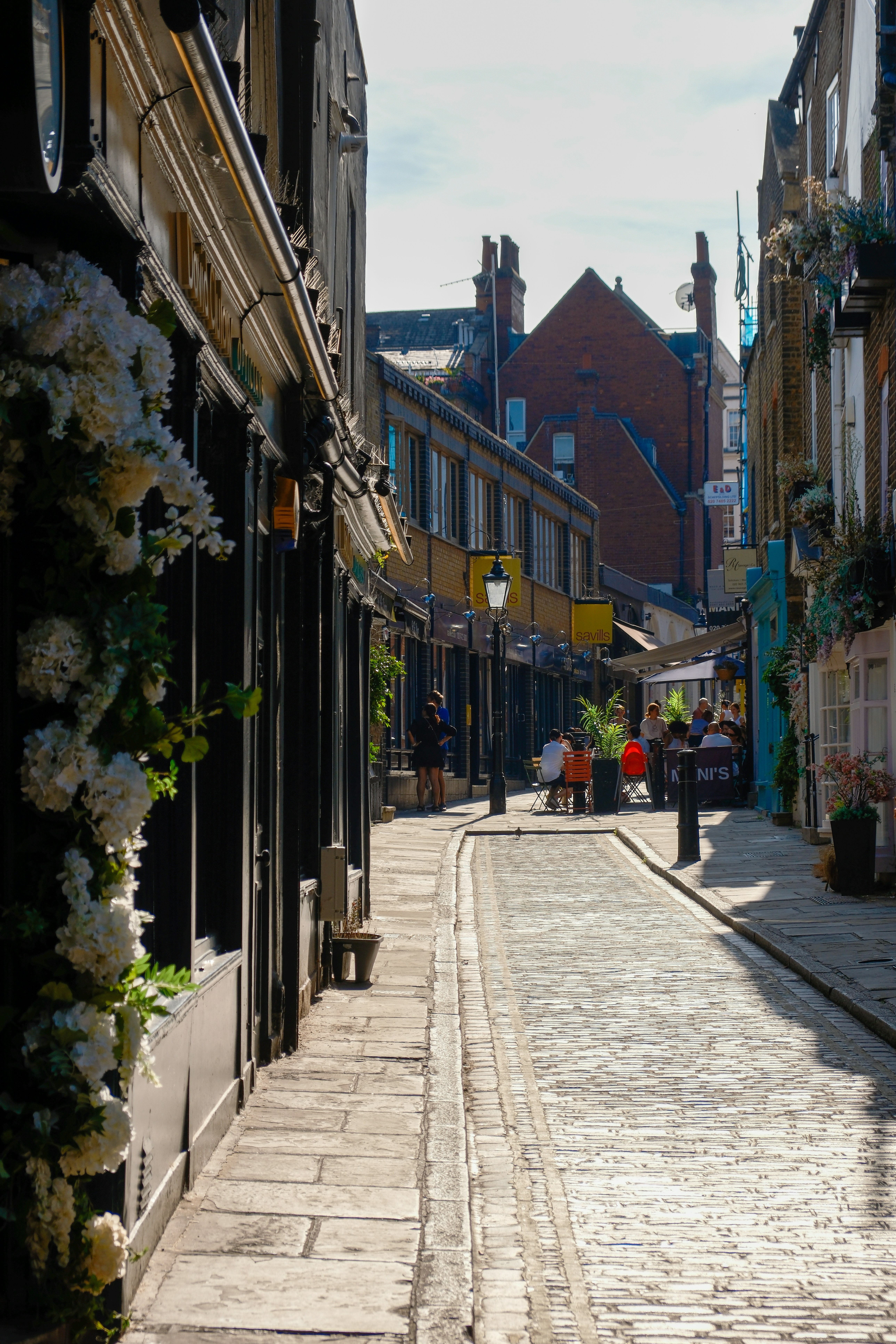
That trade-off is often less of a sacrifice than people imagine. The city still sits within easy reach, thanks to the Northern line from Hampstead, but the day begins and ends somewhere that feels distinctly local rather than purely touristic. Step outside and the first impression is often the topography, then the shifts in scale: old brick, narrow stretches, small cafés and everyday shops, and lanes that feel shaped by use rather than arranged for show. Even before you know the street names, the area suggests a London experienced at close quarters.
That is a large part of Hampstead’s appeal on a first trip. It offers a version of the city that is easy to read, yet less overwhelming than busier central districts. You are still in London, unmistakably, but not at its most relentless. The neighbourhood’s rhythm comes through in ordinary scenes as much as in architecture: people stopping for coffee, carrying groceries uphill, heading for the Tube, or drifting towards the Heath. It feels active, but not overrun by its own reputation.
The same balance helps explain why people return. Once the major sights have been ticked off, what often matters more is the feeling of coming back each evening to somewhere with its own pace, not simply somewhere convenient on a map. Hampstead is not for everyone. If your ideal stay means stepping straight into the thick of Soho, the West End or a late-night central scene, another base may suit you better. But if you want London with a little more breathing room, and with more texture between one Tube journey and the next, Hampstead makes a compelling case.
The first impression: village energy with London underneath it
Hampstead makes an impression quickly, though not in one neat, postcard moment. You emerge from the Tube, or turn into a side street, and the neighbourhood is in motion: a road climbing away, shopfronts tight to the pavement, a busy stretch giving way to a lane, steps dropping off to one side, then a quieter residential turn. Nothing feels staged. The place feels established and well used, shaped by everyday life rather than arranged for visitors.
Camden’s Hampstead Conservation Area helps explain why the place holds together so well. Its built character is formally recognised, but this is not heritage held at a distance. It remains a working high street and a functioning neighbourhood. The adopted Hampstead Neighbourhood Plan also emphasises the importance of the high street’s appearance and vitality, while the low-resolution public version points to the mix of small independent shops and cafés, alongside the chains that keep the area rooted in the city rather than drifting into rural fantasy.
That is what gives Hampstead its particular energy. It has something of a village feel, certainly, but London is always present underneath. The old spine of the area still channels the day: people picking up coffee before the Tube, stopping at a bookshop, carrying groceries uphill, meeting for lunch, threading past visitors on their way to the Heath. The atmosphere can feel intimate without ever becoming especially still. At weekends, particularly in good weather, the pavements fill fast.
For many first-time visitors, that is exactly the point. Hampstead does not feel polished into scenery; it feels inhabited. The paving can be uneven, the streets are often steep, and the elegance of the architecture never quite disguises the fact that ordinary routine is what makes the place convincing. That first impression also helps explain why the area often proves easier to stay in than newcomers expect: here, character is not separate from practicality, but part of how daily life works.
Hampstead makes an impression quickly, though not in one neat, postcard moment. You emerge from the Tube, or turn into a side street, and the neighbourhood is in motion: a road climbing away, shopfronts tight to the pavement, a busy stretch giving way to a lane, steps dropping off to one side, then a quieter residential turn.

Why first-time visitors find Hampstead easier than they expect
There is a common assumption that staying beyond the most obvious central districts must mean giving up ease. Hampstead unsettles that idea. It is connected well enough to keep museums, theatres, shops and major stations within comfortable reach, while offering a noticeably quieter landing place at the end of the day.
The practical reason is straightforward: Hampstead sits on the Northern line. For first-time visitors, that means central London remains accessible without the neighbourhood ever feeling stranded from it. Exact journey times are best treated with caution, since services, engineering works and route options change, but in practice Hampstead works well as a base for Tube-led sightseeing. Before setting out, it is worth using the TfL Go app or to check your travel on TfL for live conditions.
What you gain in exchange is a part of London that does not demand your attention every minute. After a crowded afternoon in the West End or South Kensington, the trip back can feel less like a detour than a decompression. On a first visit especially, when the city can be thrilling and tiring in the same hour, that shift in pace matters.
There are limits to the convenience, and they are worth being honest about. Hampstead’s hills and older built environment will not suit everyone in the same way, and accessibility needs should be checked carefully in advance using TfL’s guidance on accessible journey planning. It makes more sense to think of Hampstead as convenient for a certain kind of London stay, rather than automatically convenient for every traveller.
Hampstead Heath changes the pace of a London stay
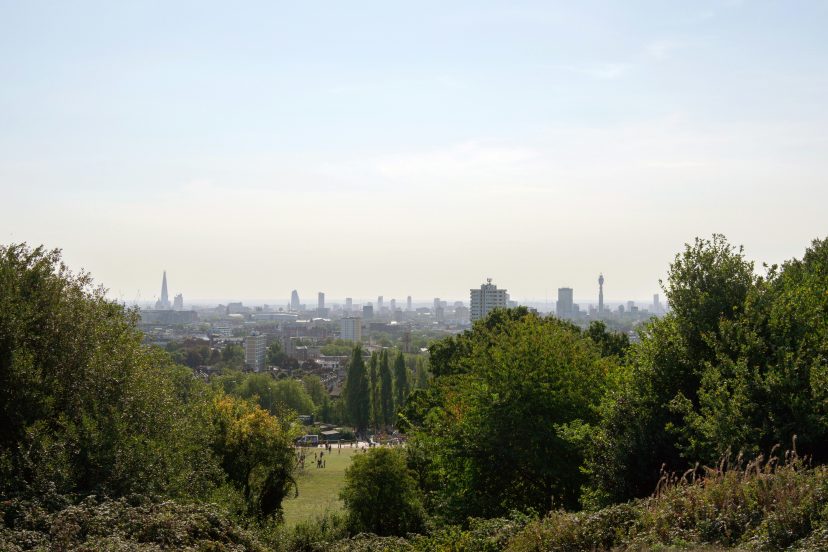
If Hampstead’s streets give the neighbourhood its character, the Heath gives it scale. For many visitors, this is where Hampstead’s pull becomes fully clear. London days can fill up quickly, with routes, timings and reservations pressing in from all sides; on Hampstead Heath, that pressure loosens. You can walk for the sake of walking, without feeling that every hour has to earn its keep.
The open space is not just a scenic extra. It alters the rhythm of a stay. On a short trip, that might mean an early circuit before heading into town, or an hour at dusk when the city begins to feel too crowded. On a longer stay, it can slip into routine: a place to clear your head, lengthen a weekend, or simply remember that London still contains real stretches of unprogrammed land.
The skyline view from the Parliament Hill viewpoint is the obvious draw, and with good reason. It offers one of those rare London panoramas in which the city looks both monumental and oddly far away.
But the Heath’s deeper appeal is not only the view. It is the licence to slow down. Paths split and rejoin. Trees close in, then open out again. The city appears, recedes and returns. If swimming forms part of your ideal London stay, official facilities on the Heath include ponds and the lido, though arrangements can change with the season and with policy, so it is always best to check details live before planning around them.
That is also why Hampstead often becomes more compelling on a second or third visit. Once the pressure to tick everything off has eased, access to green space stops feeling like a pleasant extra and starts to shape the quality of the whole trip.
Culture, conversation and the neighbourhood’s intellectual pull
Hampstead would still have a strong case without the weight of its cultural reputation. But that inheritance is part of what gives the neighbourhood its depth. Literary and intellectual history are not sealed off here behind plaques and reputations; they remain woven into the area in ways a visitor can still feel while moving through it.
Keats House provides an obvious literary point of reference. The Freud Museum London brings a different kind of gravity, shaped by exile, memory and ideas rather than simple sightseeing. Nearby, Burgh House offers a smaller cultural stop that feels closely tied to the neighbourhood itself, while Kenwood House, on the edge of the Heath, brings together landscape, architecture and art in a single setting.
The high street carries some of this atmosphere too. Bookshops still form part of Hampstead’s public face, and that matters. A place where people browse, pause and meet around books moves at a different pace from one organised only around passing trade. You do not need to devote a whole day to museums to register the area’s cultural life; often it appears in passing, between coffee, errands and a walk uphill.
That slower mode of discovery helps explain why repeat visitors remain attached to Hampstead. It does not reveal itself all at once. It rewards wandering, doubling back and leaving enough room in the day to notice what would otherwise disappear inside a tighter itinerary.
What daily life feels like here on week one and week three
The longer you stay, the less the headline attractions matter. What starts to count is whether a neighbourhood supports ordinary life well: a good morning coffee, somewhere to buy dinner, a walk that feels restorative rather than dutiful, and transport links that keep the rest of London within reach without setting the tempo for every hour.
Hampstead tends to wear that test well. Its centre still functions as a real local high street, not merely a handsome one. There is enough footfall to keep the place animated, enough residential quiet to make evenings feel like a reset, and enough variety in the streetscape to stop the area feeling exhausted by repetition.
That balance appeals to different visitors in different ways. Long-stay leisure travellers often value the mix of routine and atmosphere. Relocating professionals may find it especially useful as a neighbourhood to try in real time, particularly if they want to understand what a greener, less frenetic London base feels like from Monday to Friday, not just on a bright Saturday afternoon.
Still, Hampstead asks for a little candour. The hills are real, and carrying bags uphill can settle your view of a place quickly. Accessibility may require careful planning. The area also has a distinctly premium feel, and while this article avoids hard cost comparisons, it is fair to say Hampstead does not usually present itself as a bargain option. Nor is it a nightlife-first district.
What it offers instead is London with some of the pressure eased, not removed. You still feel the city’s force, but you can step back from it more easily.
For readers who want to browse London accommodation options more broadly, Hampstead is one strong starting point rather than the only answer. And if you already know you want a longer neighbourhood-based stay, these guides to Notting Hill as a home neighbourhood and South Kensington for long stays show how different London bases can shape the experience in very different ways.
Is Hampstead right for your kind of London trip?
Hampstead is best for travellers who want their first London base to feel distinctive, settled and a little apart from the city’s most intense centre-of-gravity areas. It suits couples, solo travellers, repeat visitors, longer leisure stays and relocating professionals who care as much about neighbourhood rhythm as major sights.
It is less ideal if your priority is walking to as many headline attractions as possible, or if your trip revolves around late-night central plans every evening. In those cases, somewhere more central may be the better fit, even if Hampstead remains a rewarding day trip.
If, however, you want a London stay with proper atmosphere, access to major green space, and a daily pattern that feels human rather than relentlessly scheduled, Hampstead is easy to understand and hard to shake off. People choose it first because it offers a calmer, more textured introduction to the city. They come back because once they have tried it, many find that this is the London rhythm they were hoping for all along.
For stays within the area itself, options such as Hampstead Oriel Place Apartments or Hampstead Garden Hideaway can make sense for travellers who want to lean into the neighbourhood experience rather than simply sleep near it. Readers planning a wider relocation or longer transition may also find our guide to moving to London helpful as a next step.